Heraclea Sintica, Rupite and Petrich fit naturally into one full-day trip from Blagoevgrad. The route moves through three very different layers of the region: ancient urban history, the volcanic and spiritual landscape around Kozhuh, and a modern border-region town that works well for lunch, museums or an overnight stay.
Heraclea Sintica — an ancient city rediscovered
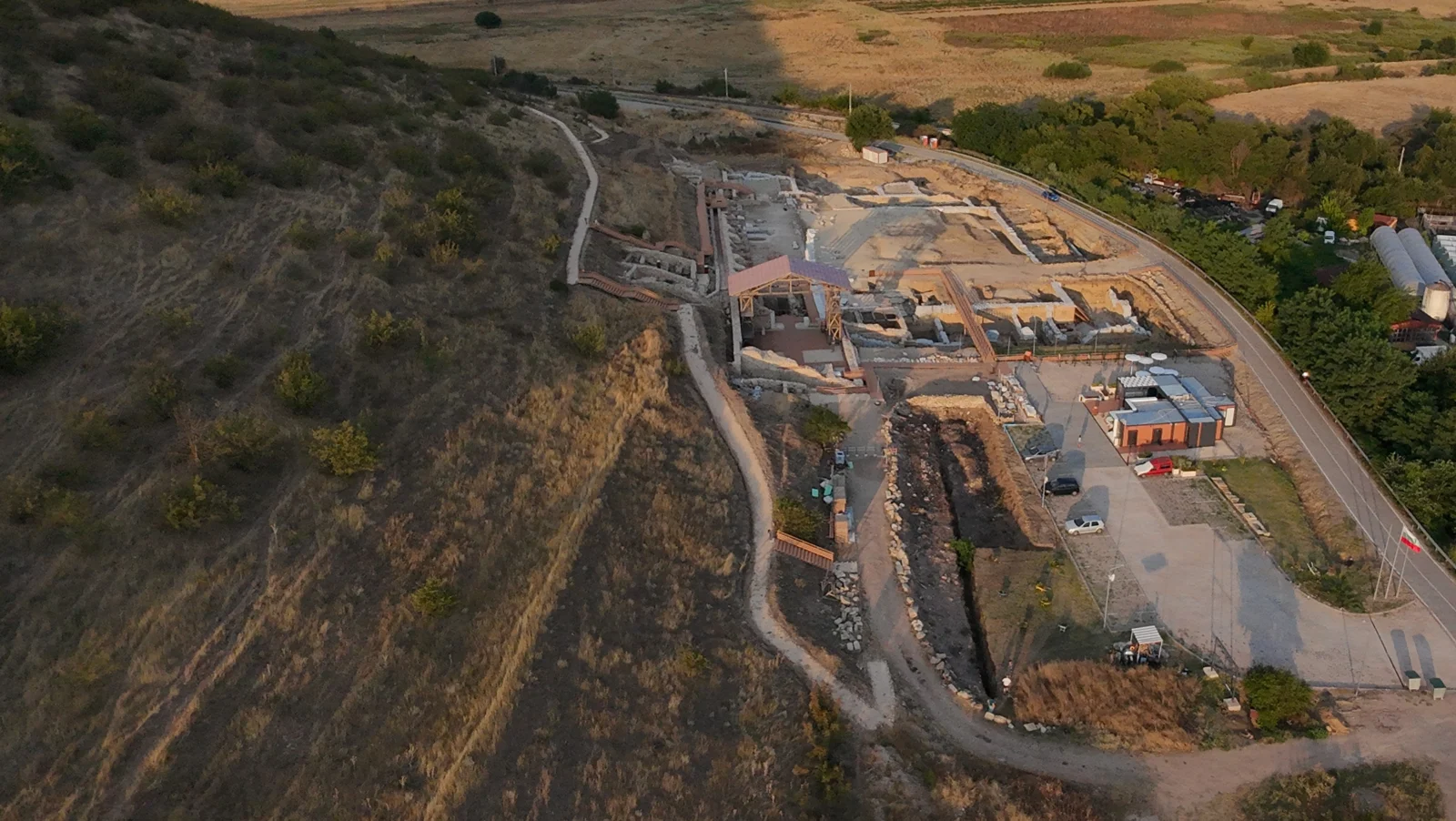
Heraclea Sintica developed in the lands of the Thracian Sinti and became an important urban centre in the middle Struma valley. The Municipality of Petrich describes its foundation in the 4th century BC and its later prosperity during the Roman period, when the city had a monumental forum, basilicas, residential quarters and developed infrastructure.
The city declined after powerful earthquakes in Late Antiquity but remained inhabited into the 6th century. Modern excavations have revealed public buildings, inscriptions, streets and architectural elements that make the site much more than a collection of isolated ruins. Allow enough time to understand the forum and the scale of the ancient city.
The identification of the site as Heraclea Sintica was strengthened by a Latin inscription found in 2002, an important step in resolving the long-standing question of the city’s location.
Rupite — Kozhuh, mineral springs and Vanga
Rupite lies at the foot of the volcanic hill Kozhuh. The Ministry of Tourism describes the protected area as a landscape of volcanic origin with hot mineral springs reaching about 74°C. This unusual geology is one of the reasons the locality feels so different from the surrounding Struma valley.
Rupite is also inseparably linked with Vangeliya Gushterova — Baba Vanga — one of the most recognisable Bulgarian figures of the 20th century. Stories about her clairvoyance are part of popular and cultural memory; they should be understood as beliefs and public tradition rather than scientifically verified claims.
St Petka Bulgarska and Vanga’s house
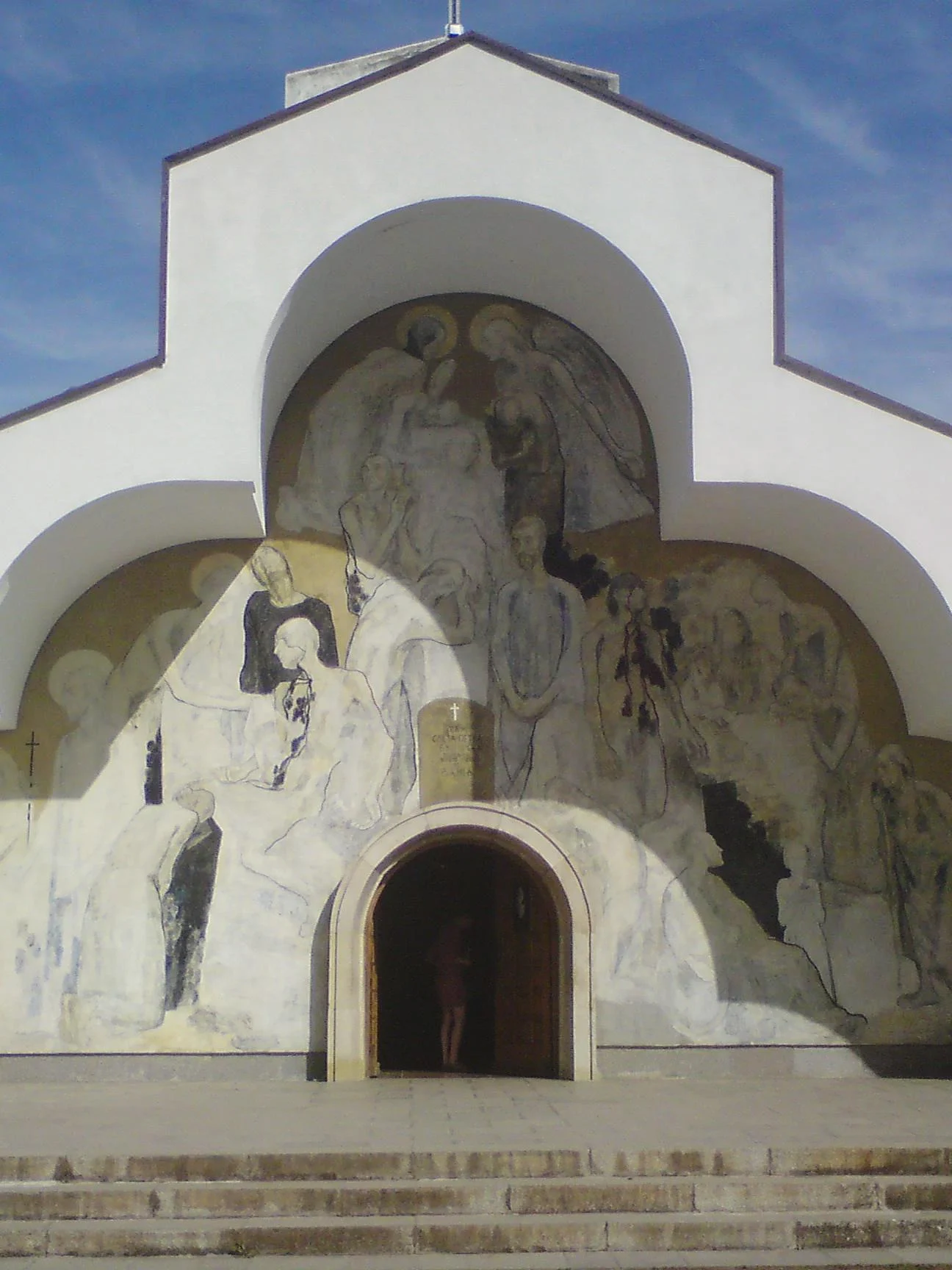
The St Petka Bulgarska memorial church was built in Rupite in 1994 at Vanga’s initiative. The complex and the nearby house associated with her final years are among the main reasons people visit the area today. Keep the visit respectful: for many visitors this is a spiritual and memorial place, not simply a tourist attraction.
Petrich — the city behind the route
Petrich is a practical final stop and a useful base for exploring Bulgaria’s far southwest. Its municipal cultural programme highlights the Historical Museum, Vanga House in the town centre, Heraclea Sintica and Samuil’s Fortress among the main attractions of the municipality.
Use Petrich for lunch, a short central walk and the Historical Museum, or stay overnight if you want to extend the trip towards Belasitsa, Samuil’s Fortress or the Greek and North Macedonian borders on another day.
Find accommodation in Petrich on Booking.com ↗
How to plan the day
A practical order is Blagoevgrad → Heraclea Sintica → Rupite → Petrich → Blagoevgrad. Start with archaeology while you have the most time and energy, continue to Rupite for the landscape and Vanga memorial complex, and finish with Petrich for food, museums or an overnight stay. Check current opening hours and archaeological-site access before travelling.
Organised options
Viator search results for this part of southwestern Bulgaria change frequently and a consistently indexed dedicated Heraclea Sintica product is not always available. Rather than linking to a potentially stale product, use the live Viator search below and verify the itinerary, departure city and whether Heraclea Sintica and Rupite are actually included.
Search Heraclea Sintica, Rupite & Petrich experiences on Viator ↗